Glimbora Insights
What Buy Canadian Means for Korean Skincare Retail

“No shopper walks in asking for a trade war. They just quietly put the American brand back on the shelf.”
That gesture is the story of February 2025. Since the February 1 tariff order, Buy Canadian has jumped from hashtag to habit, with shoppers flipping packages to check origin before price. The order is paused for now. The mood is not. For beauty buyers this creates an awkward math problem: Canada does not make most of what fills a skincare aisle. The answer is a smarter import mix, which is why Korean cosmetics wholesale in Canada just became the most interesting line on a buyer’s spreadsheet.
This guide walks through what the movement actually looks like at shelf level, why K beauty sits outside the boycott entirely, how duty free entry keeps your landed cost steady while everything else moves, and the exact steps we would take to rebalance a beauty aisle this spring without alienating a single shopper.
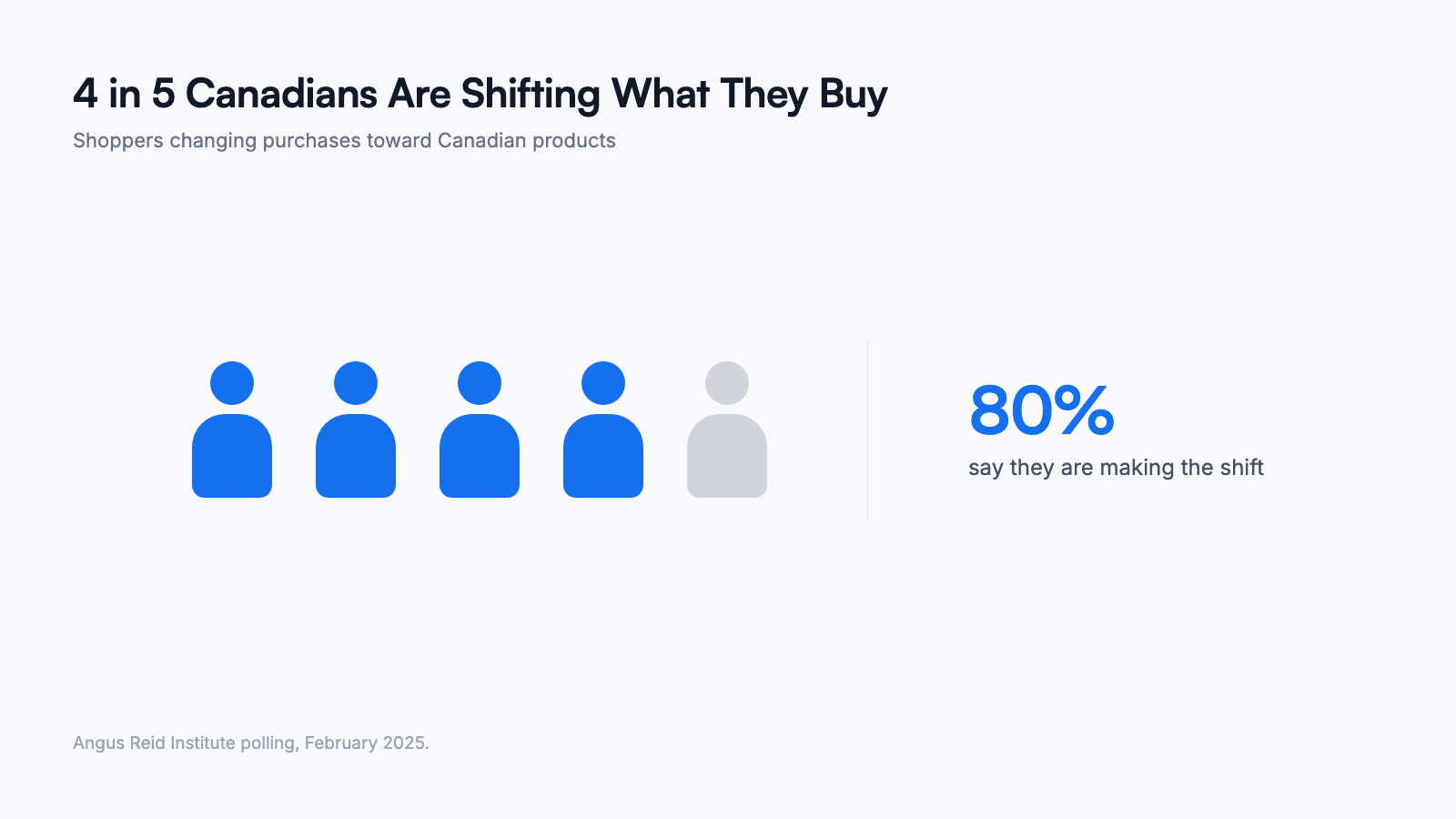
Insight: Polling this month shows about 4 in 5 Canadians shifting purchases toward products made in Canada, and grocers like Loblaw are adding maple leaf shelf labels to make the swap easy.
—
The Import Nobody Is Boycotting
The Buy Canadian reflex is aimed at one country, and it is not Korea. K beauty arrives with zero political baggage and a serious growth story: Korea shipped a record $10.2 billion of cosmetics in 2024, up 20.6%, making it the world’s number 3 exporter. New trade data even shows Korea passing France as the top source of cosmetics imported into the United States, at roughly 22% of the total. Translation for your aisle: the products your shoppers already watch on TikTok and ask for by name are made in Seoul, not Cincinnati.
Watch how the sentiment actually behaves on a sales floor. Shoppers are not walking out empty handed; they are substituting. A shopper who skips an American moisturizer still needs a moisturizer. Hand them a Korean essence with a texture no mass brand has matched and the basket stays full, the ticket often grows, and nobody has talked politics. That substitution instinct is why the case for Korean skincare in Canadian stores was already strong before the tariff story broke, and is stronger now.
There is a second layer worth saying out loud: sourcing Korean products through a Canadian distributor is itself a Buy Canadian act. The warehousing, the labelling work, the freight contracts, and the jobs sit in Vancouver, not in a foreign fulfilment centre. The product is proudly Korean; the supply chain is Canadian. In this climate, that combination is exactly what a shelf tag should whisper.
—
Duty Free Since 2015, and Why Landed Cost Is the Whole Game
Here is the part many buyers miss: Korean cosmetics enter Canada duty free under the Canada Korea Free Trade Agreement, in force since January 1, 2015. Landed cost, the number that actually sets your margin, is the invoice price plus freight, clearance, and any duty owed at the border. On a Korean serum that last line is zero, and it has been zero for a decade. While tariff scenarios swirl around goods crossing the US border in both directions, the landed cost on a Korean order does not move, whatever next week’s headline says.
That stability is worth real planning. Four moves for the next shelf reset:
Audit the aisle: tag every SKU by country of origin, not brand HQ. Plenty of familiar labels are produced in the US even when the branding feels global, and origin is the line your shopper is now reading on the back of the box.
Rebalance, do not gut: replace the slowest American facings first and give the space to proven Korean categories like essences, sun care, and sheet masks. A boycott is not a licence to strip a planogram overnight.
Sell the certainty: a stable, duty free supply line means you can hold price while competitors reprint shelf tags. Shoppers remember which store did not flinch.
Model both scenarios: run your margin math with today’s costs, then run it again assuming new measures raise the cost of US sourced goods. The Korean column reads identical in both versions. That is the point.
One edge case worth naming: origin follows where a product is made, not where the brand is headquartered. A Korean brand is not automatically Korean made, and a global conglomerate can absolutely manufacture in Korea. Trust the made in line on the label, because that is the line your shopper trusts.
Key takeaway: A boycott aimed at the US does not touch Korean supply. Duty free entry since 2015 means your K beauty margins hold even if the tariff story changes again next week.
—
A Buyer’s Playbook for Korean Cosmetics Wholesale in Canada
Interest is easy; execution is where the margin gets made. Here is the sequence we recommend to retailers acting on this moment:
Confirm compliance before the purchase order: every cosmetic sold in Canada must be notified to Health Canada within 10 days of first sale, and mandatory label information must appear in both English and French. When the distributor is the importer of record, those filings and bilingual labels are finished before a carton reaches you.
Start with a pilot, not a remodel: pick two or three categories, give each a defined facing count, and set a review date about eight weeks out. Reorder what moves; retire what does not.
Pick a partner like it decides the outcome: restock speed, authorized sourcing, and Canadian held inventory determine whether the new section thrives or stalls. Our full checklist for choosing a Korean cosmetics wholesale partner in Canada covers the questions to ask before the first order goes out.
Merchandise the story: a small shelf talker noting the line is imported and supported by a Canadian company answers the origin question before it is asked. Eqqualberry’s run into eight H Mart locations across Metro Vancouver and Alberta shows what steady replenishment plus a clear story can do for a young brand.
On our side, this playbook is simply the day job. Glimbora carries 17 Korean brands and about 390 catalogued products, including Skin1004, Numbuzin, Mixsoon, and Eqqualberry, with regulatory intake, labelling, import clearance, and warehousing handled from Vancouver, so the only thing that changes on your end is the planogram.
—
Buyer FAQs
Will Buy Canadian sentiment turn shoppers against Korean skincare?
No. The movement targets American products, not imports in general. Korean lines carry no political baggage, and buying them through a Canadian distributor keeps the wholesale dollars, the jobs, and the warehousing on this side of the border.
Do Korean cosmetics face any new tariffs in Canada right now?
No. They have entered duty free under the Canada Korea Free Trade Agreement since 2015, and the current dispute is between Canada and the United States. Your landed cost on Korean stock is unchanged.
How quickly can a store move on Korean cosmetics wholesale in Canada?
With domestically warehoused stock, an opening order can be on shelf in days rather than the weeks an ocean shipment from Korea requires. Start with pilot facings in essences, sun care, and masks, then expand on sell through.
What paperwork lands on the retailer?
Very little when your distributor imports the goods. Notification to Health Canada and bilingual labelling are the importer’s job, so you receive retail ready stock and simply sell it.
Moments like this reward the buyers who move while everyone else watches the news. The origin question is on every shopper’s mind, K beauty answers it without a single awkward conversation, and the duty free math holds no matter what happens next. Browse the wholesale catalogue to see what could fill those facings before the spring reset.
Ready to turn a tense news cycle into a stronger shelf?
Let’s talk.
Glimbora Insights